
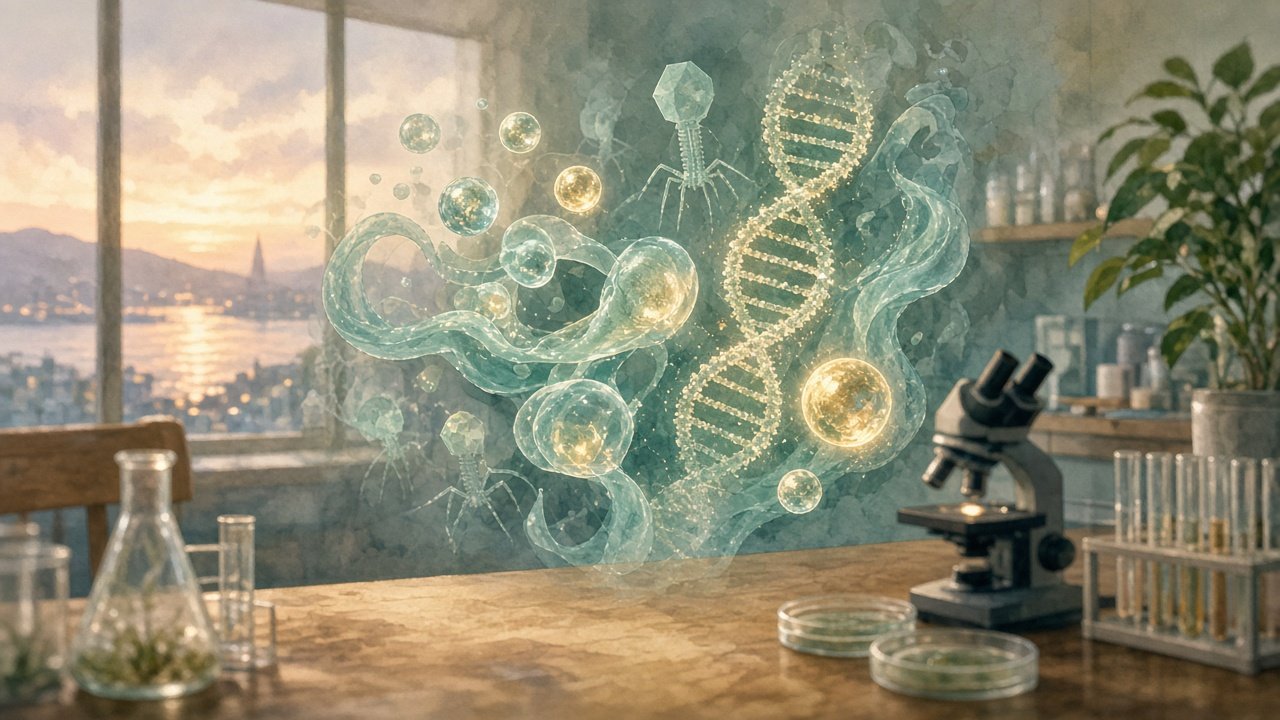
On 23 September 2026, Anthropic published early results from a newly formed life-sciences research group: with only high-level direction from scientists, Claude searched DNA sequence data and discovered a novel enzyme system associated with a CRISPR-like DNA repeat array. The team calls it ART (array-associated reverse transcriptases). ART is found mainly in bacteriophages; its function is not yet known. The same post introduces how the group stitches computational hypothesis generation to wet-lab testing in one workflow.
Many turning points in biology began when someone noticed something odd amid nature’s staggering diversity of molecular machines—restriction enzymes, Taq polymerase, CRISPR repeat sequences. Anthropic’s question is whether general AI models can systematize and accelerate that kind of noticing.
A new lab: fundamental biology with Claude
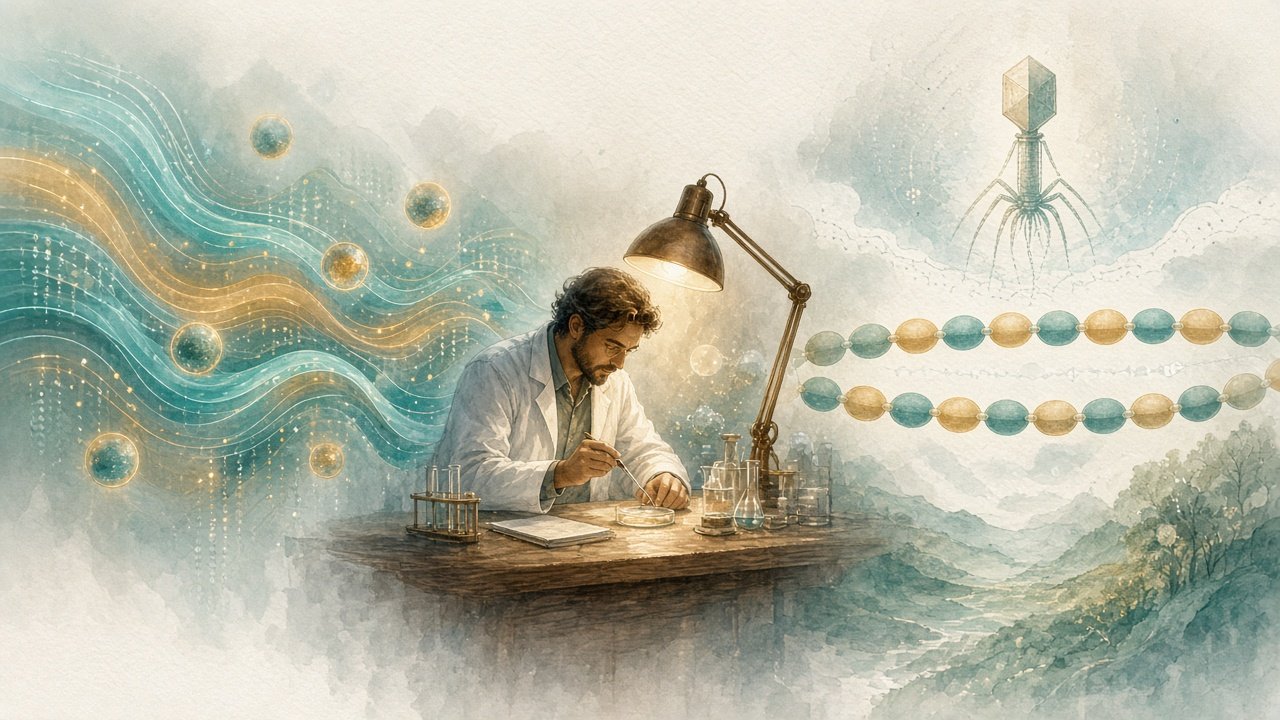
According to Anthropic’s official account, the group formed in spring 2026 in the Bay Area, building a typical molecular-biology laboratory alongside other life-sciences teams that work on training Claude in biology and chemistry and on drug discovery. The focus is fundamental biology: exploring DNA datasets, identifying under-characterized protein families, generating hypotheses at scale, and testing them in the lab.
All wet-lab work is performed by human scientists. Research stays at BSL-1 / BSL-2; the lab does not handle pathogens that can infect humans. Claude’s role is search, analysis, and candidate reporting; the pipette work remains human.
How the discovery unfolded: ~950 agents, ~21 hours, ~210 million tokens
Scientists prompted Claude to search a massive DNA database for interesting new examples of reverse transcriptases (RTs). Human involvement was largely limited to that initial prompt and later lab work; agents combed the data, investigated distinct RT families, and used their own judgment to surface candidates.
Official scale figures: after roughly 950 agents spent about 21 hours and about 210 million tokens searching, one agent spotted a repeating DNA pattern next to an odd-looking RT gene. It then counted repeats and spacing, compared the layout with known RT systems, checked the literature for prior reports of the pattern, and filed a human-readable report.
The funnel is also explicit: agents gathered 200,000+ RTs → about 3,500 new candidate systems → the 20 most compelling candidates written up as human-readable reports. For an expert scientist, that class of analysis can take weeks to months.
What ART is — and what it is not yet
ART is found mainly in bacteriophages (viruses that infect bacteria) and has three parts:
- a reverse transcriptase (RT);
- a neighboring partner / accessory gene of unknown function;
- a long array of evenly spaced DNA repeats.
The array layout resembles a CRISPR array, which banks distinct RNA sequences that make CRISPR-Cas systems programmable biotech tools. First experiments show that the ART array is likewise expressed as a set of distinct short RNAs, suggesting something analogous may be at play; further experiments are underway.
Boundaries that must stay clear:
- The underlying RT in a jumbo phage had already been identified in the literature; Claude appears to be the first to notice the associated non-coding DNA repeat array and an accessory protein of unknown function.
- ART’s primary function is not yet known; Anthropic states that work is ongoing and chose to share early—to demonstrate Claude’s capabilities and invite external collaboration.
- The company notes that ART’s combination of traits has previously been found together in only a handful of systems, all of which are programmable and perform operations such as cutting, copying, and pasting DNA—that is analogy and motivation, not a claim that ART is a proven gene editor, nor that it replaces CRISPR.
After reviewing the preprint, CRISPR pioneer Feng Zhang (MIT / Broad Institute) said this is an exciting example of how AI agents can contribute to biological discovery; identification of RNA-repeat arrays associated with reverse transcriptases is “genuinely intriguing and merits further investigation,” and he hopes the work encourages more scientists to explore how AI can support research.
The workflow itself: hypothesis surplus, taste as method
Anthropic also describes a recurring pattern: Claude reads the literature, reproduces established results from public data to check methods, searches for family members or genomic neighbors that fit no described system, and writes a short human-readable report proposing a function and evidence. Critical follow-up usually eliminates most candidates. Survivors move to laboratory expression and biochemical/structural characterization, with Claude helping interpret data.
Because Claude produces hypotheses so prolifically, which reports are worth testing has itself become an object of study: lessons from hundreds to thousands of candidate reports per campaign feed back into the instructions that teach Claude to mimic scientific taste. Day-to-day work runs in Claude Science and Claude Code—and sometimes a harness that coordinates many parallel Claude sessions—tools that overlap with what any scientist can use.
What this signals for AI × science
The center of gravity of this announcement is less “another gene-editing tool has arrived” than a checkable workflow demonstration: general-purpose model agents scan sequence space for anomalies at scale → produce reviewable candidate reports → human scientists run wet experiments under controlled biosafety → early findings ship as a preprint with an open invitation to collaborate.
For readers tracking AI in science, three points stick:
- Granularity of the discovery: the increment is not “first sighting of a certain RT,” but noticing a previously overlooked non-coding repeat array plus accessory-gene combination.
- Uncertainty is kept on the record: function unknown, experiments ongoing—that limits overclaim and defines the next falsifiable questions.
- Human–AI division of labor is explicit: search and hypothesis generation can be massively parallel; experimental execution and biosafety remain human responsibilities.
The preprint is public; Anthropic welcomes external research proposals and hopes to extend the approach across genomics and other fields. Whether ART becomes a programmable tool depends on mechanism experiments still ahead—but “an agent can autonomously flag a pattern worth a scientist’s pause” is already a citable new node in 2026’s fundamental-biology workflow.
Primary sources
- Anthropic: Claude discovers a novel enzyme system with CRISPR-like repeats (2026-09-23)
- Anthropic technical preprint PDF: https://www-cdn.anthropic.com/22573675ada52a8ca8a97a1a4b4326b2f208a071.pdf