
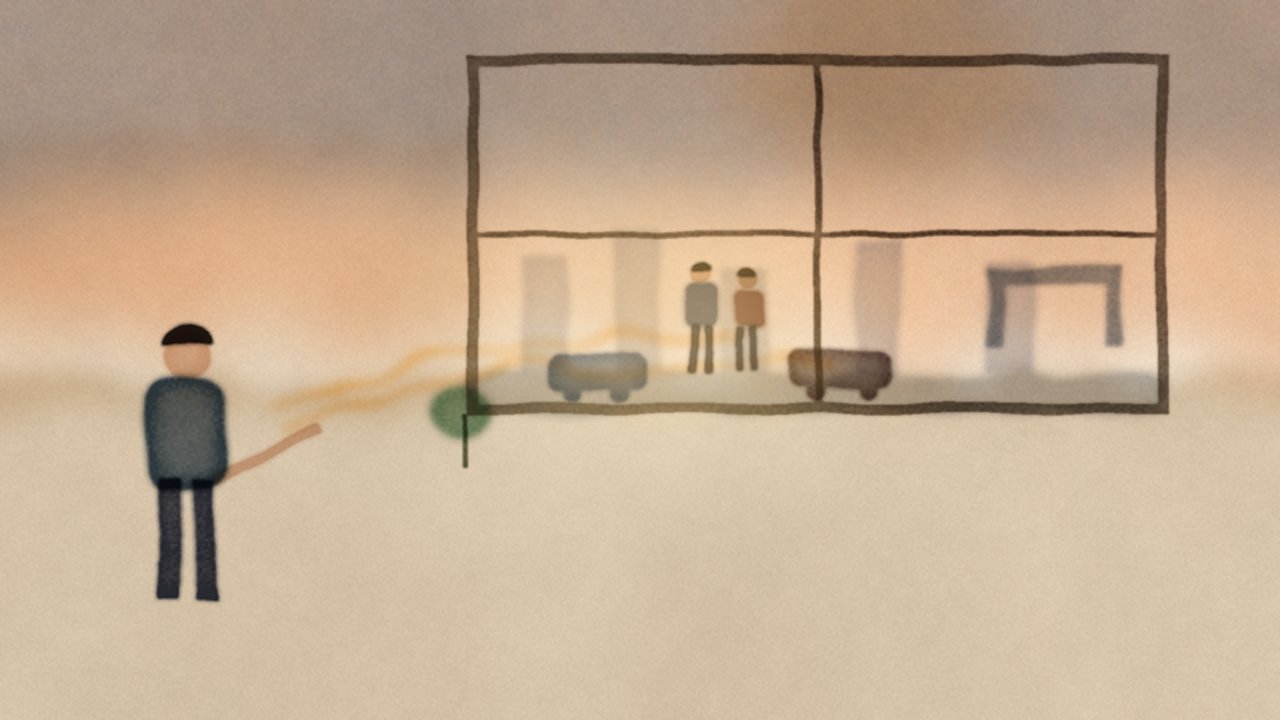
On 7 October 2026, Scale AI Labs and Elorian released Humanity’s Sixth Sense (HSS), a benchmark that measures how multimodal models perform at intuitive visual reasoning—the kind of inference people make at a glance about what happened, what fits, who holds authority, and what abstract pattern a scene implies.
According to the Scale Labs blog, most existing visual benchmarks test either expert-level analysis or low-level perception, and largely leave everyday human intuition untested. HSS fills that gap with 522 open-ended tasks: 288 images and 234 video clips (17.6 hours of video in total).
What a glance is meant to capture
Four domains, eleven subdomains
Each task pairs a scene with a human-written prompt that probes structure not explicitly depicted, organised into four domains:
- Temporal and causal dynamics: retrodiction, physical mechanism, and what happens next;
- Physical and spatial logic: hidden or invisible properties, affordance and fit, alien viewpoint, and reachability;
- Social understanding: theory of mind (beliefs, emotions, knowledge gaps), plus roles, norms and power;
- Abstract and contextual inference: consequences of changes the scene does not show, and patterns or pareidolia.
A strict admission filter
Annotators write a question, a reference answer and rubric criteria for each item. Tasks must require inference beyond what is visible, need no specialised expertise, and command unanimous human agreement on the answer. After three independent review rounds, only 15.1% of 3,466 authored tasks (522) were admitted. Models answer in free form (no multiple choice); an LLM judge scores each answer against the rubric, and a task counts as solved only when every criterion is met.
The human–model gap
Scale evaluated 25 multimodal models from eight vendors alongside 20 human participants. The blog highlights several findings:
- People score 93.1%; the strongest model, GPT-6-astra at maximum reasoning effort, reaches 53.6%; the median model scores 30.9%. With the image or video removed, GPT-6-astra drops to 6.6%, confirming the tasks cannot be solved from language priors alone.
- Models spend about 4,046 reasoning tokens per task on average—questions people answer at a glance still trigger long chains, often without a correct answer. Raising reasoning effort helps overall but hurts in some subdomains.
- Across 8,573 failures, about 94% trace to perception or latent inference and only about 5% to faulty logic; the most common causes are missing the decisive visual cue or misidentifying an object, person or role.
- Social understanding is the weakest domain: it is the lowest-scoring domain for 21 of 25 models, averaging 24.4% against about 34.1% for the other three. Video is harder than images for 23 of 25 models, by 7.3 points on average.
- With agentic tools that can crop, zoom and search, the best setup reaches about 59.3% on a 388-task subset—still far below humans—and depth / 3D misreadings barely improve.
The leaderboard page reports the same headline result: GPT-6-astra (max) at about 53.60%, followed by GPT-6.1-Sol, Claude-Opus-5.5 and others; most models sit below 40%.
Why this sits with psychology
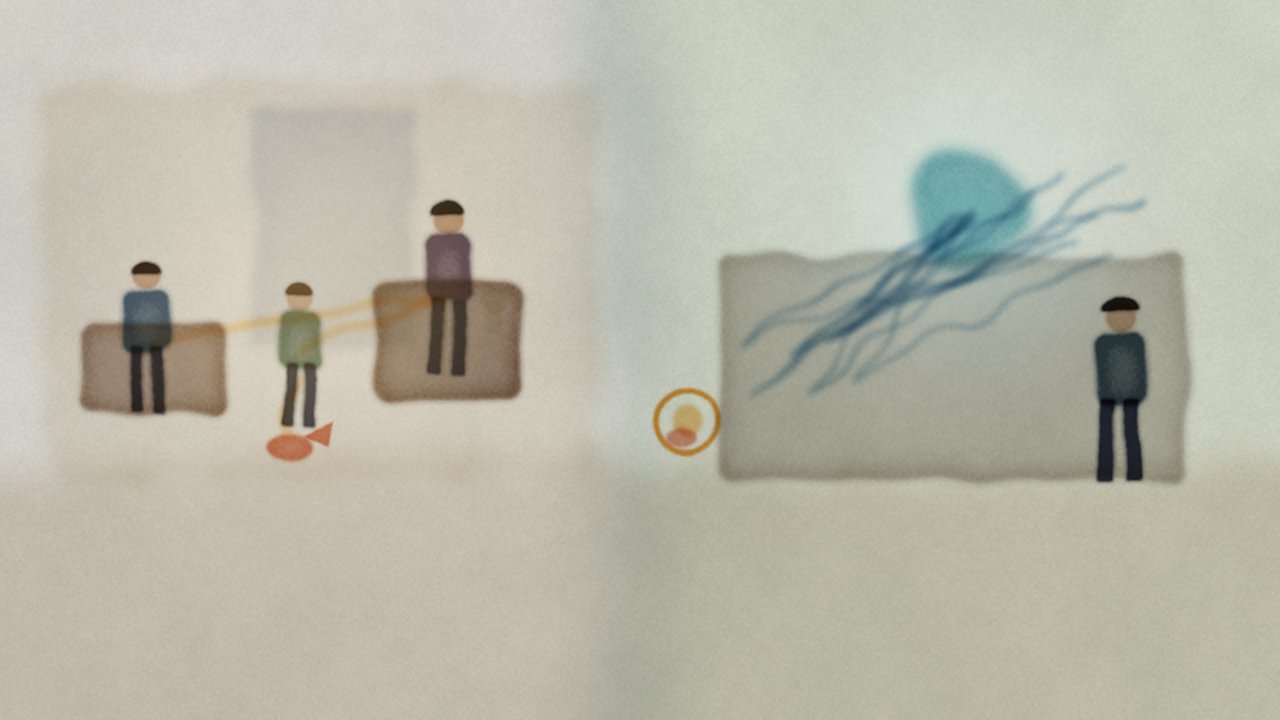
The Scale blog cites cognitive science: people can categorise natural scenes in roughly 150 milliseconds while extracting physical dynamics, motives and social structure. For AI agents deployed in homes, vehicles and workplaces, that ability to “read a room” is described as a core necessity rather than a luxury. HSS turns the axis into a measurable score and argues that scaling on current benchmarks has so far left intuitive visual reasoning behind.
Documented limits include: video without audio or transcripts; scores mediated by an LLM judge; and public-web media that may have appeared in training data.
Primary sources:
- Scale Labs blog, Introducing Humanity’s Sixth Sense: Measuring Intuitive Visual Reasoning, 2026-10-07, https://labs.scale.com/blog/introducing-humanitys-sixth-sense
- Scale Labs leaderboard, Humanity’s Sixth Sense, https://labs.scale.com/leaderboard/hss
- Paper page, Humanity’s Sixth Sense: Benchmarking Intuitive Visual Reasoning in Multimodal Models, https://labs.scale.com/papers/humanitys-sixth-sense
- Dataset, https://huggingface.co/datasets/ScaleAI/HSS